A guide for those interested in composing music for oud (ud)
How to Write for Oud
Shaul Bustan
Watch: How to Write for Oud
01Introduction
My name is Shaul Bustan. I am a composer, conductor, and oud player — perhaps an unusual combination but very useful for the topic!
Many have asked me how to write for the oud, or more specifically, how to write for my oud. Assume you are familiar with the sound and history of the oud. This guide is intended for composers wanting to write for the oud and for conductors working with oud players.
First, every oud player has a unique style and likely plays on a unique instrument built specifically for them. This can vary based on the player’s origin and the oud’s maker.
Not all oud players are trained to read and play from sheet music as is typical in classical music training. This doesn’t mean they can’t play what you’ve written — it may simply require more time, perhaps with the help of MIDI or sample recordings of their part. Nowadays, many younger oud players can and want to read sheet music.
In summary, the best advice I can give is to contact your oud player and ask at least these three questions:
- About their instrument
- Their comfort with reading sheet music
- Their playing style
Now, how do you write for an oud? Or more correctly, how do you write for me as an oud player?
02The Three Questions
My first instrument — 13 strings
My primary instrument is a 13-string oud made by Hamid Ghorbanzade, an Iranian oud maker based in London. It has a very round, balanced tone, though it isn’t particularly loud. It features fine-tuning pegs, which help with tuning, but it’s not perfect.
- Tuning, low to high
- D2, G2 G2, B2 B2, E3 E3, A3 A3, D4 D4, G4 G4
- Range
- D2 to A6 — almost as low as a cello, almost as high as a viola
- Best keys
- D, Dm, Em, G, Gm, Am, Bm
- Acceptable keys
- E, A, B
The oud is a transposing instrument like the classical guitar, meaning that written notes sound an octave lower. You don’t need to notate it with an octave clef as with guitar. Please write it all in a treble clef (G clef).
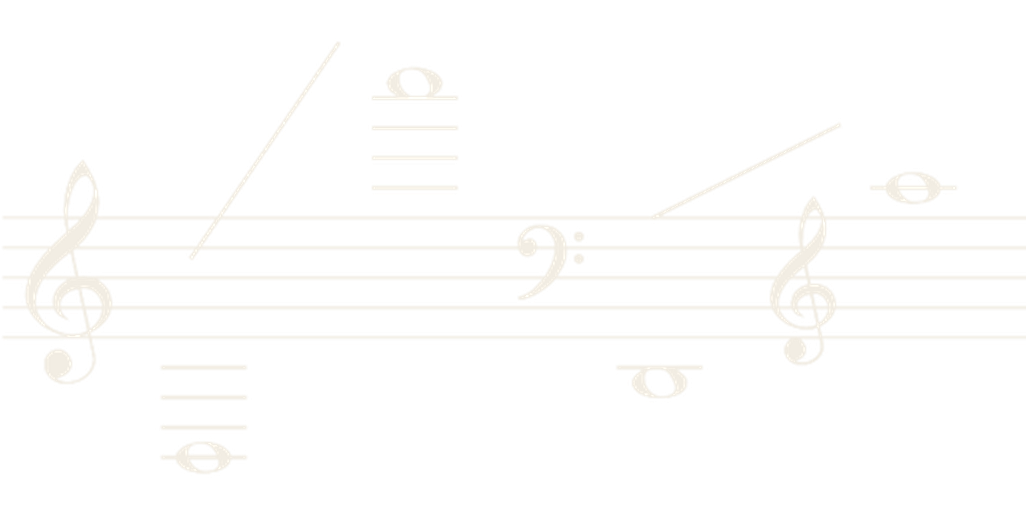
This is the most common notation for oud, but some players might prefer a different approach, which I’ll demonstrate with my second instrument. For higher passages, just use a high octave symbol. Remember, it will still sound an octave lower.
Ranges on my oud
- D2 bass string
- Full and round, good for open-string bass playing or extended techniques
- Lower range, G2 to E3
- Lacks deep bass and may buzz a bit. I typically play softly here to minimise buzzing. When amplified, I use EQ to emphasise this range slightly
- High range, E3 to D5
- Bright and loud
- Very high range, D5 to A6
- Can be intense but very clear
My second instrument — 11 strings
My second oud is also made by Hamid Ghorbanzade. It has 11 strings, is louder, and has more bass presence.
- Tuning, low to high
- C2, E2 E2, A2 A2, D3 D3, G3 G3, C4 C4
- Best keys
- C, Cm, E, Em, F, Fm, G, Gm, Am
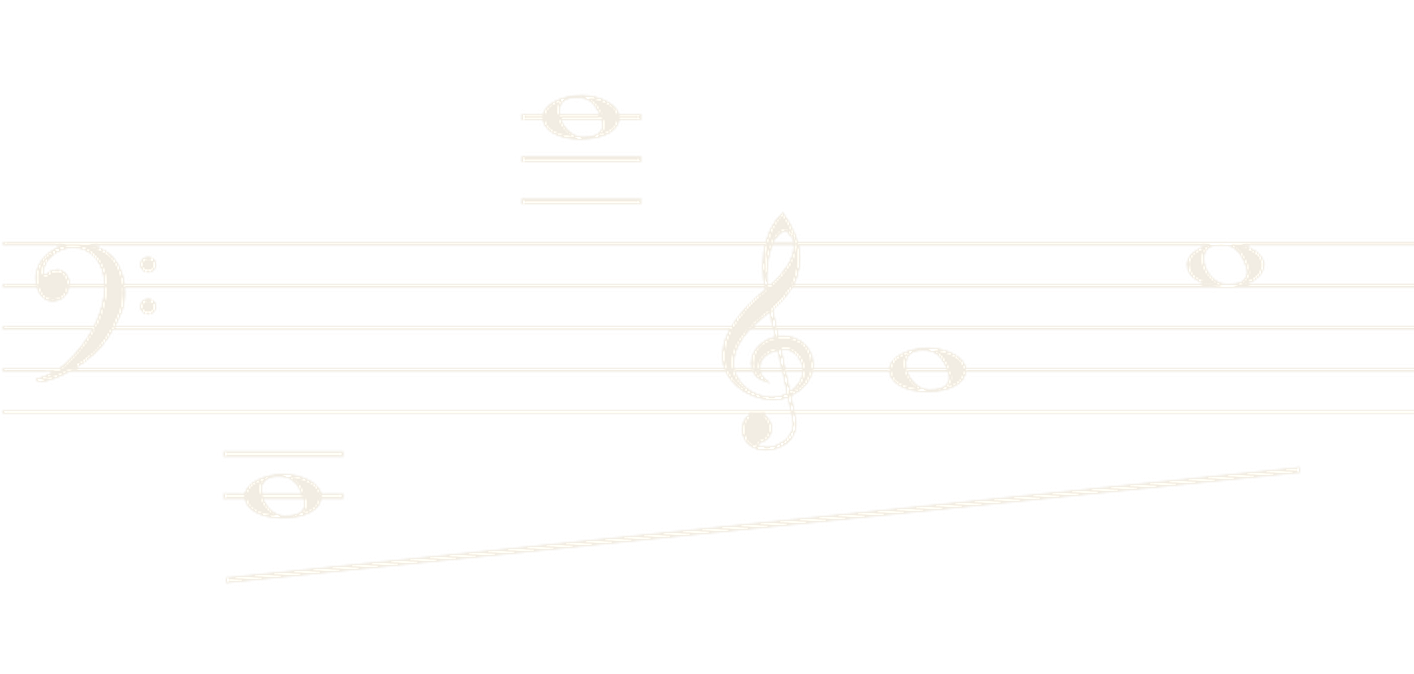
For this instrument, you can write for me in bass clef, without transposition, just like a cello. If you go higher than G4, switch to treble clef.
Reading and style
As a composer and conductor, my sight-reading skills are strong. However, due to the unique characteristics of my instrument, immediate sight-reading — especially when handling challenging jumps — isn’t always straightforward.
My playing style combines a sensitivity for sound and the nuances of Western classical music with the freedom drawn from the world of jazz and world music. I enjoy improvising and am inspired by Persian, Israeli, and Mediterranean music.
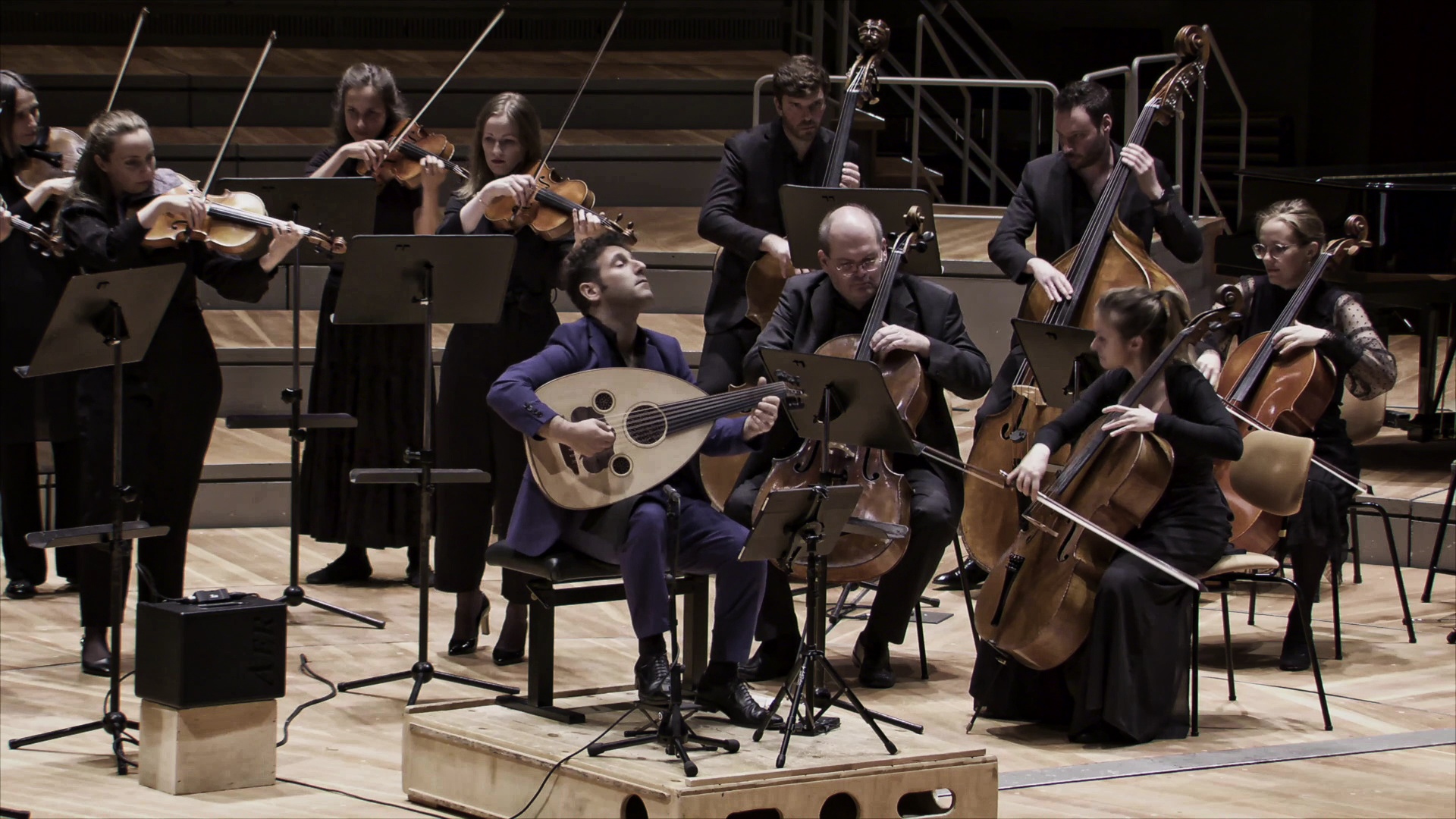
Playing Winter with the German Chamber Orchestra Berlin, Berliner Philharmonie
03What to Write and What to Avoid
First of all, an oud is not a guitar. Avoid writing chords — they can be played, but they’ll never sound clean. Simple chords using one finger and open strings, like E3, A3, D4, A4, can sound nice. Chords on higher strings generally work better. And please notate every note individually — don’t write something like Am7/9.
The oud is played with an oud plectrum (risha / mizrab) and can use downstrokes, upstrokes, and tremolo. Typically, this isn’t notated; if unspecified, longer notes are likely to be played with tremolo. Specify non-tremolo if desired.
Oud players generally prefer smooth, stepwise melodies without large leaps. Phrases can often be played just as easily in a different octave, for example.
Quarter-tone playing varies between styles — Turkish, Arabic, Persian and others — and between players. You can notate them, but consult your oud player to ensure stylistic accuracy. I generally use quarter tones in the middle range near the head of the instrument for greater control. It is also possible to use quarter tones in higher positions, but don’t overuse them without context.
Oud players love to improvise; it is a significant part of playing the oud, so give room for it, and you will be amazed.
04Extended Techniques
- Finger techniques
- Play with fingerpicking, similar to guitar style, either in a fingernail or non-fingernail approach; flamenco techniques can also be used
- Playing positions
- Experiment with sul ponticello, sul tasto, and normale / naturale positions
- Percussive techniques
- Use the oud as a percussive instrument by tapping or drumming on its body
- Different picks
- Playing with different types of rishas, or a guitar pick
- Natural harmonics
- These can sound beautiful on the oud
There is much to explore, so feel free to experiment and open your imagination.
05A Note for Conductors
Most oud players are not used to playing in an orchestra under a conductor. Be patient and give them space.
06Thank You. Stay in Touch
Thank you for reading. If you have any further questions, feel free to email me.
Yours,
Shaul
shaul (at) shaulbustan.com
Copyright © 2026 Shaul Bustan. All rights reserved.